Showing posts with label science. Show all posts

1/31/09

Making herbal medicines

I thought I would enjoy the herbal medicine-making class at the Garden for the Environment today, but I guess I wasn't in the mood for what was offered. I'm trying to figure out why I didn't like it.

What can I say without sounding like a jerk. As a scientist you learn to put up with, or accept, a certain amount of pseudoscience and scientific illiteracy from the general world. Sometimes letting things go is a compromise you make in order to get by and get along. I admit to making that compromise from time to time, but I don't think it's a virtue.

Sometimes you want to reach out and enlighten. That works best one on one. Much harder to do in front of a group of people you don't know, especially when the teachable subjects are many and various. Nobody likes a know-it-all. Moreover, when you're paying to take a class, you don't want to teach it too, right? That's only reasonable.

In all honesty, I do not regard herbal "medicine" as medicine. Simply having, or allegedly having, medicinal properties does not make something a medicine. Medicine is contingent on the current state of knowledge. A miracle drug in one age is a dangerous, antiquated therapy in another. We never have perfect knowledge, we never will.

I will gladly take any benefit from the quinine in my gin and tonic. If my blueberries have cancer-fighting antioxidants, so much the better. I can hardly function in the morning without a cup of coffee. But am I going to call those things medicine? Not with any seriousness. You can if you want to, but why would you? I guess you would if it's part of your tradition, or worldview. So it is that "herbal medicine" is about more than just botanical extracts and plant preparations.

Above all else, the instructor wanted us to think of herbal medicine-making as a way to learn more about plants. Well, what gardener doesn't want to learn more about plants. If she had stopped there I would be fine. But she and the class made and exchanged several scientific-sounding claims that seemed to have little if any basis in fact. If you're going to talk about qi and chakras, why mess it up with pH and cancer?

I think herbal medicine is not for me. I thought about responding to a few points that I found particularly irksome, but I'm just going to do the blog post now.

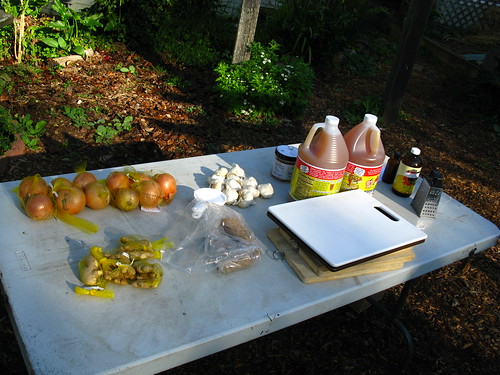
We prepared two herbal remedies--a vinegar for colds and a honey for sore throats. This is the set-up for the vinegar.
IMG_2671

To make it, add chopped garlic and onion and pepper flakes to raw apple vinegar. Cover and let steep several weeks in a cool, dark place. The instructor brought in some already-made material to try. It was hot and tingly. I thought it would be great on a cold cabbage salad.

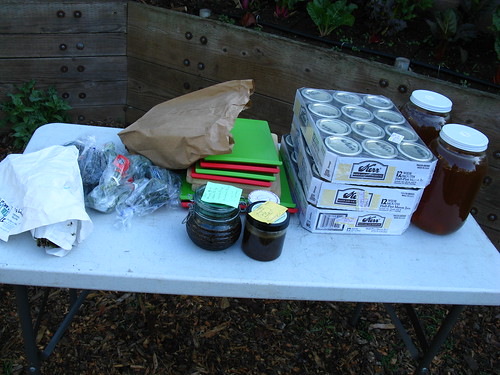
For the honey:
IMG_2672

Add equal amounts of thyme, sage, and mint to honey, steep for several weeks, then filter (heat it in double boiler until it runs, and pour it through a strainer). Also quite tasty, but cool and smooth as opposed to the hot, pungent vinegar.

If this subject excites you, here are some books you might be interested in:
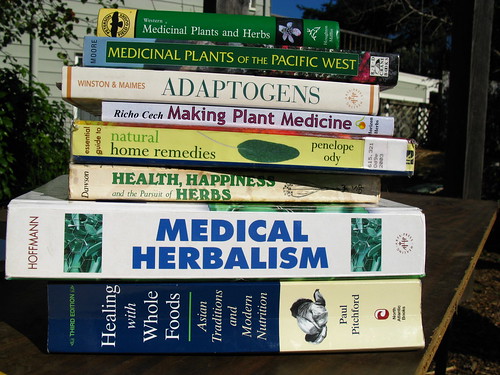
IMG_2680


I'm just going to leave it at that.
1/8/09

Health News

Three news stories I thought were interesting--nothing about gardening. Well, one of them is about healthy food, so let's do that one first.

#1. The 11 Best Foods You Aren't Eating. Number 11 is canned pumpkin. "A low-calorie vegetable that is high in fiber and immune-stimulating vitamin A; fills you up on very few calories. How to eat: Mix with a little butter, cinnamon and nutmeg." I would like a bowl of that right now.

#2. Play Tetris after trauma to innoculate yourself against PTSD. An experiment is described wherein a group of volunteers were made to view gruesome images of injury and death. Afterwards, half played Tetris, and the other half sat and did nothing.
What saved the Tetris-playing group from post-traumatic stress symptoms was the limited powers of their brains to perform two similar operations at the same time -- to multitask -- the authors wrote. In the hours after witnessing a horrifying scene, a person would normally commit two different versions of the scene to memory -- the sensory-perceptual processing version, which records the upsetting sights, sounds and physical sensation of the event -- and the verbal-conceptual version of the event, in which the brain renders the events witnessed into a more dispassionate narrative.

In the crucial period following the film, the Tetris players were too engaged in the game-playing task -- which taxed their visual and spatial processing skills -- to consolidate the upsetting memory of the film's sights and sounds and their own physiological distress upon watching them, the authors conjectured.
#3. Finally, studies of oxtocin and vasopressin--hormones important to human sexuality and love--may offer insights into disorders like autism and schizophrenia. Also, "reducing love to its comprehensive parts helps us understand human sexuality and may lead to drugs that enhance or diminish our love for another."

12/6/08

I took BART to the fungus fair

at the Oakland Museum. (BART is like our subway.) The 39th Annual Fungus Fair, in fact. (I think I'm 39.)

Garden clubs go starving for membership. Independent nurseries close up and go out of business. Seed companies sell out to big corporations.

Are plants yesterday's news? Is fungus is the thing now? Read any good fungus blogs lately?

DSCF1091

DSCF1092

DSCF1055

DSCF1089

DSCF1088

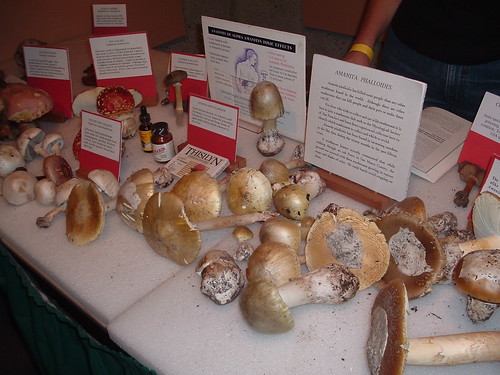
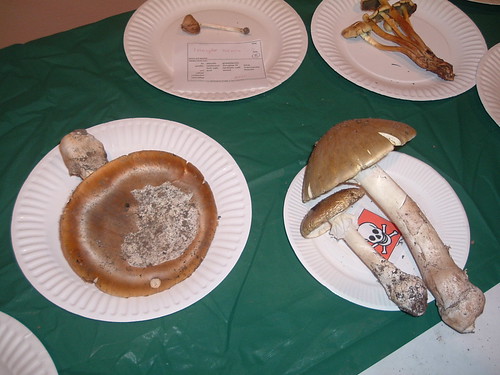
I learned how to distinguish the death cap Amanita phalloides from similar, edible varieties. The death cap lacks small striation marks around the edge of the cap. That made it seem easy to tell them apart. Well, I don't like to eat mushrooms very much, so getting confused likely won't be a problem for me.

DSCF1073

You can see how alike the death cap is to an edible mushroom. (Left is edible; right is poisonous)

DSCF1080

Originally from Europe, but introduced to California 100 years ago, the death cap is now very common in the Bay Area. The local news reports at least a few poisonings every year. Mushroom foraging is a popular family activity with some Asian communities.

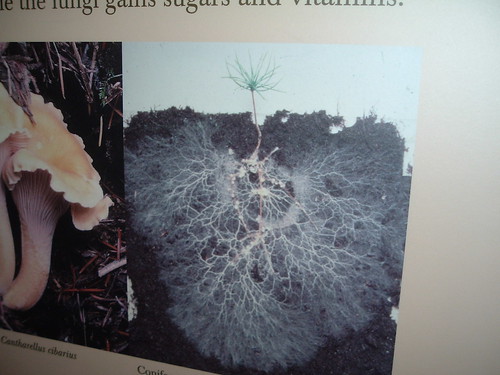
The fungus forms an ectomycorrhizal relationship with many California native plants including the Monterey Pine (Pinus radiata) which is one of the most commonly planted plants in the world. Speaking of mycorrhyzae, here's a picture of just such a fungus-plant symbiotic relationship with a pine seedling.

DSCF1084

You don't water California native plants during the hot summer because the water arouses dormant pathogenic fungi which quickly overtake the beneficial symbiont. The pathogenic fungi can out-compete the symbiont, and the plant dies.

I also learned that you can touch poisonous mushrooms without fear of poisoning. I thought you weren't even supposed to touch them, but I was told it's okay to touch any mushroom. (Unless, like anything else, you have a skin allergy.) You can even put a death cap in your mouth and chew--just do not swallow.

The poison itself is a peptide (i.e., protein), like ricin from castor bean (Ricinus communis), but unlike many plant poisons which tend to be small molecules like strychnine alkaloids or digitalis glycosides.

Mushrooms do make some small molecules however. Psilocybin, the psychoactive material in so-called hallucinogenic mushrooms is a simple chemical derivative of the ubiquitous neurotransmitter serotonin, which is known in many animals and plants, as well as mushrooms and some single-celled organisms. Walnut, pineapple, banana, and tomato all contain serotonin. (Note: anyone know about serotonin in a prokaryote?)

There were experts on hand for identifying mushrooms, and lots of tips for the amateur.

DSCF1081

DSCF1077

DSCF1079

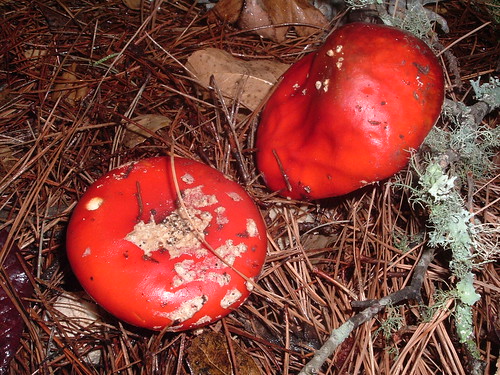
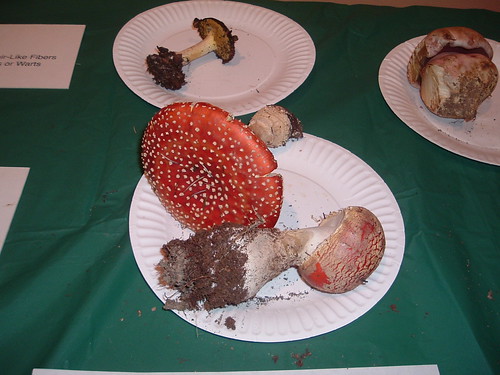
I learned where the fly agaric mushroom (Amanita muscaria) got its common name. The mushroom has a chemical that attracts and stupefies flies. People used to put the cap in the kitchen upside down and it would fill up with flies that could be thrown out.

DSCF1082

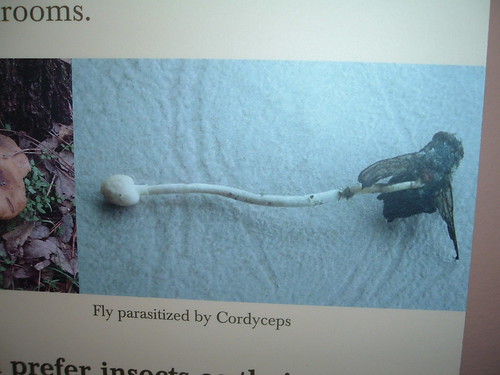
Speaking of flies, here's a picture (of a picture!) of a fly parasitized by a Cordyceps fungi and the mushroom growing out of it. Think about the fly being converted to mushroom. Amazing. See Planet Earth Cordyceps footage here.

DSCF1083

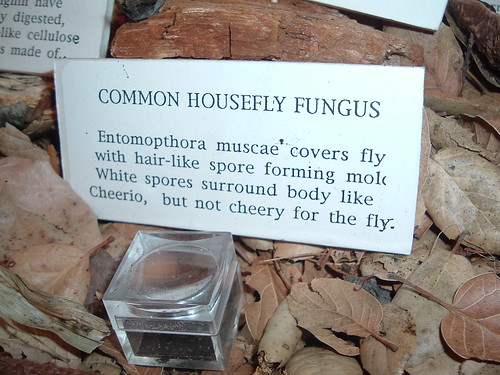
Several other fungi parasitize flies. Someone could have written a better sign for this one.

DSCF1075

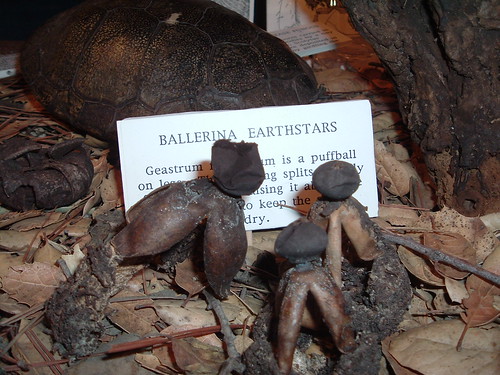
The grooviest fungus I saw today was definitely the Ballerina Earthstar, Geastrum fornicatum. Earthstars are apparently common across North America, although I'd never heard of them until today.

DSCF1074

When the fruiting body emerges from the ground, it starts off as a compact, round mass (you can see one at 9 o'clock in the picture above, and I don't know why there's a turtle shell in this display--please don't ask me about that). Then, when it's time to release the spores, the compact round part opens up and the "ballerina" stands up on three legs. The spores are released through an operculum on top of the round puffball that sits on top of the legs in response to a mechanical disturbance, e.g., the impact of a raindrop. If that isn't the most amazing thing you've heard today, I don't know what to tell you.

Have you heard of this before?

DSCF1060

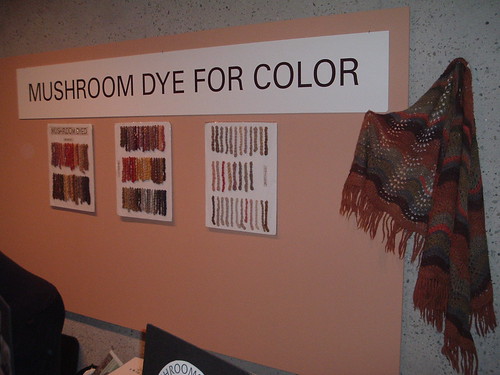
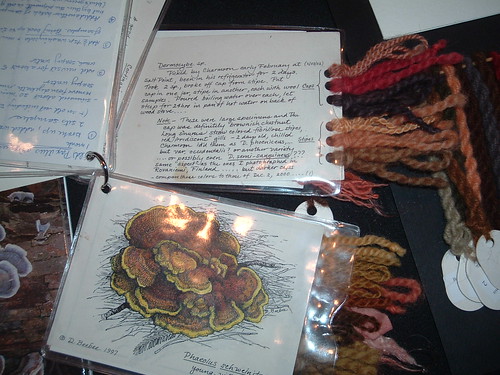
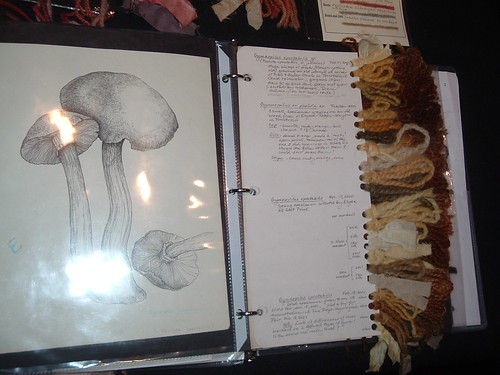
This woman brought a large collection of note cards and notebook pages about mushrooms she's collected and the different processes she used to extract pigments from them used to dye yarns. All very detailed and thorough, plus, she drew color pictures of everything she collected.

DSCF1062

DSCF1061

Truly, there are some remarkable people in the world.

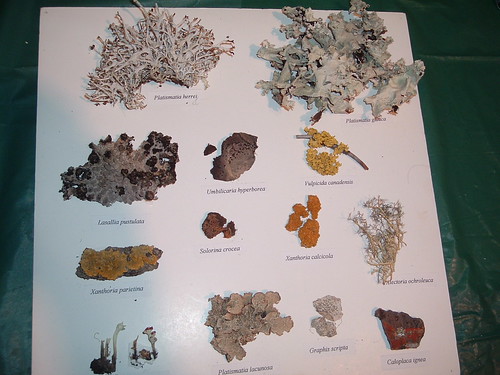
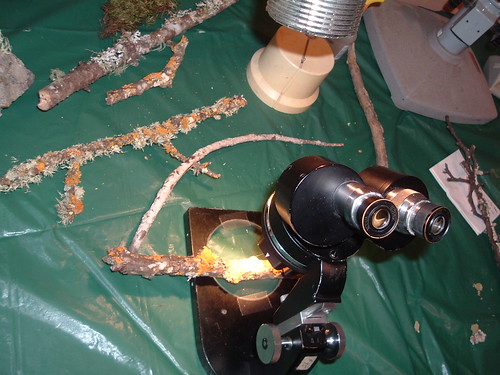
I actually spent most of my time talking to the woman from the California Lichen Society. I would like to join the California Lichen Society. California has a great diversity of lichens and apparently people come from all over the world to see our lichens. So how come I've never met a lichen tourist before?

DSCF1063

Lichens, you may know, are fungal-algal symbiotic pairs that typically grow on rocks or dead wood or live epiphytically. Any scientific name for a lichen refers to the fungus, as the algal part is microscopic and lives inside. Apparently, a theory now is that all mushrooms have a lichen in their evolutionary past. Have you heard of the Amherst biologist Lynn Margulis? I was reading about her endosymbiotic theory when I got up to get a glass of milk just before the Loma Prieta Earthquake of 1989.

DSCF1064

Margulis theorized that our cell mitochondria were originally separate organisms that were taken inside the cell as a symbiont. Now they're us. The notion of where one thing ends and another thing begins has always fascinated me. What is the manzanita without its mycorrhizae?

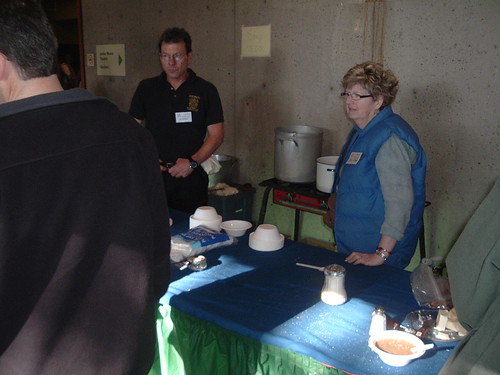
If none of that interests you, there was mushroom soup,

DSCF1094

and kids doing mushroom art,

DSCF1093

and some more awesome mushrooms.

DSCF1058

DSCF1054

DSCF1053

DSCF1068

ADDED: Six ways mushrooms can save the world, video.